AI-Assisted Coding is the 3D Printing of Software Development. Here’s How to Use It for Maximum Impact.


.svg)
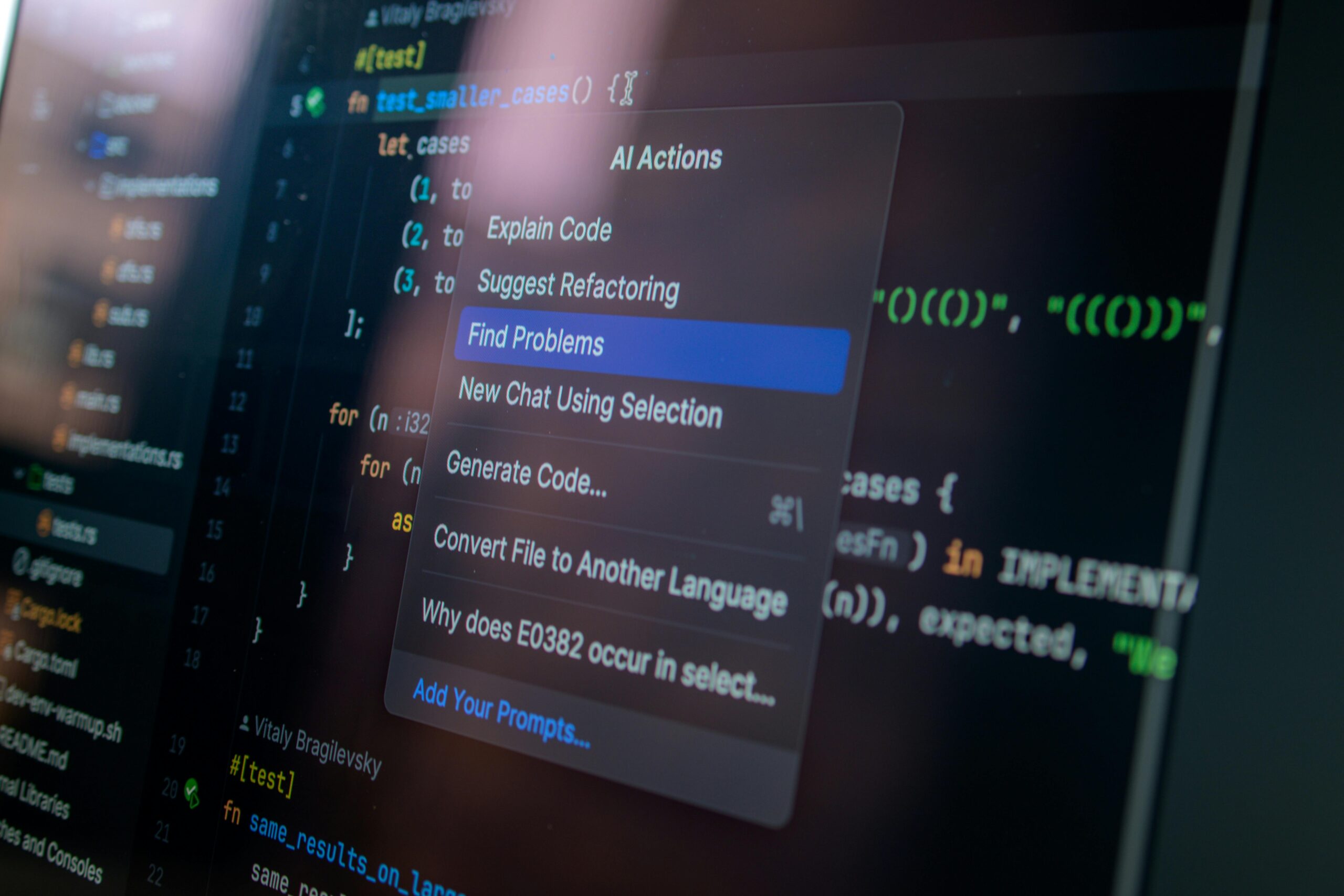

As humans, we tend to think before we build. However, as Tim Brown taught us, there comes a point in the ideation process where we must build in order to think.
We need multiple iterations of a single concept to give us something to react to, test boundary conditions, and bring our idea to life so we can question its design more deeply. Importantly, we need the ability to do this without shouldering the burden of the entire engineering cycle every time.
3D printing has revolutionized manufacturing in this exact way by enabling rapid, iterative prototyping that gets products to market faster. Similarly, in the software world, coding assistants are giving engineering teams the ability to iterate on high-fidelity versions of their vision so they can ship software in record time.
Agentic coding assistants in particular are challenging a decades-old fact of software development: that building on an imperfect but evolving codebase consistently outperforms starting from a blank slate. In this new era of software development, success is no longer dependent on an organization’s existing code base. This is a seismic shift which is fundamentally changing the economics of software.
Software developers can now offer a level of progressive delivery that goes beyond the agile practices and continuous delivery. For example, teams can leverage agentic coding assistants and feature flagging to rapidly deliver new functionality to small cohorts of their user base—and they can do so using code bases that are developed via agentic coding assistants. Rolling out changes to small user cohorts in this manner shifts the adoption power toward the end user and reduces the productivity dip that often accompanies new software releases.
AI is transforming software development, but one thing remains constant: the role of humans—including their ability to work together effectively—is as crucial as ever. Coding assistants aren’t a replacement for fundamental knowledge and domain expertise. And they certainly aren’t a silver bullet for inadequate teamwork.
The 2025 DORA State of AI-assisted Software Development Report echoes this truth, emphasizing that AI acts as an “amplifier” or “mirror” for teams. This means that strong, high-performing teams will excel with the help of these tools, but teams that are already struggling or fragmented will have their existing issues magnified.
Succeeding with coding assistants requires a change in mindset. We need to rethink the most important parts of the software development process and be mindful of how and where we apply AI.
To gain value from coding assistants, organizations should treat them as end-to-end enablers across the value-delivery lifecycle—not just tools for incremental, local improvements. For example, if a company uses coding assistants solely for engineering, developer productivity may increase, but that could create an unmanageable workload for product and design teams upstream and documentation and quality teams downstream. Companies need to get clear on the outcomes they’re trying to achieve, and then think systemically about AI’s impact and system-wide optimization before implementation.
The Agile Manifesto notably values working software over comprehensive documentation, but this longstanding tenet of software development is changing. Agentic coding assistants thrive on thorough, detailed documentation: they require highly curated specifications in terms of scope, capabilities, and tasks. The recent general availability of Amazon’s Kiro underscores the growing importance of spec-driven development as a critical enabler of coding assistants.
Instead of focusing on company-wide AI enablement, organizations should first hand-select a few people across the value chain to upskill, learn, and act as champions of the technology. These individuals should be fully bought-in, capable, and willing to serve as a resource people can turn to once AI tools are more widely implemented throughout the organization. In addition to supporting these champions’ ongoing learning and experimentation, companies should also include AI as a hard objective in their performance evaluations; this level of disciplined change management is crucial for success.
Just as 3D printing revolutionized prototyping but never replaced mass production, coding assistants are accelerating high-fidelity prototypes and rapid iteration—but not replacing the role of humans and teamwork. To unlock the transformative power of this technology, organizations need to think holistically when it comes to its application, create robust documentation, and empower the right people. As with 3D printing, the magic isn’t in the tool itself; it’s in how skillfully you put it to work.


Weekly insights from the people shaping the future of technology.

Insights from leading voices in technology
Latest video podcasts
Quick takes
Insightful articles on tech trends




Whether you’re a reader, contributor, or tech enthusiast, we’d love to hear from you. Use the form below to send us a message — we’ll get back to you as soon as we can.